

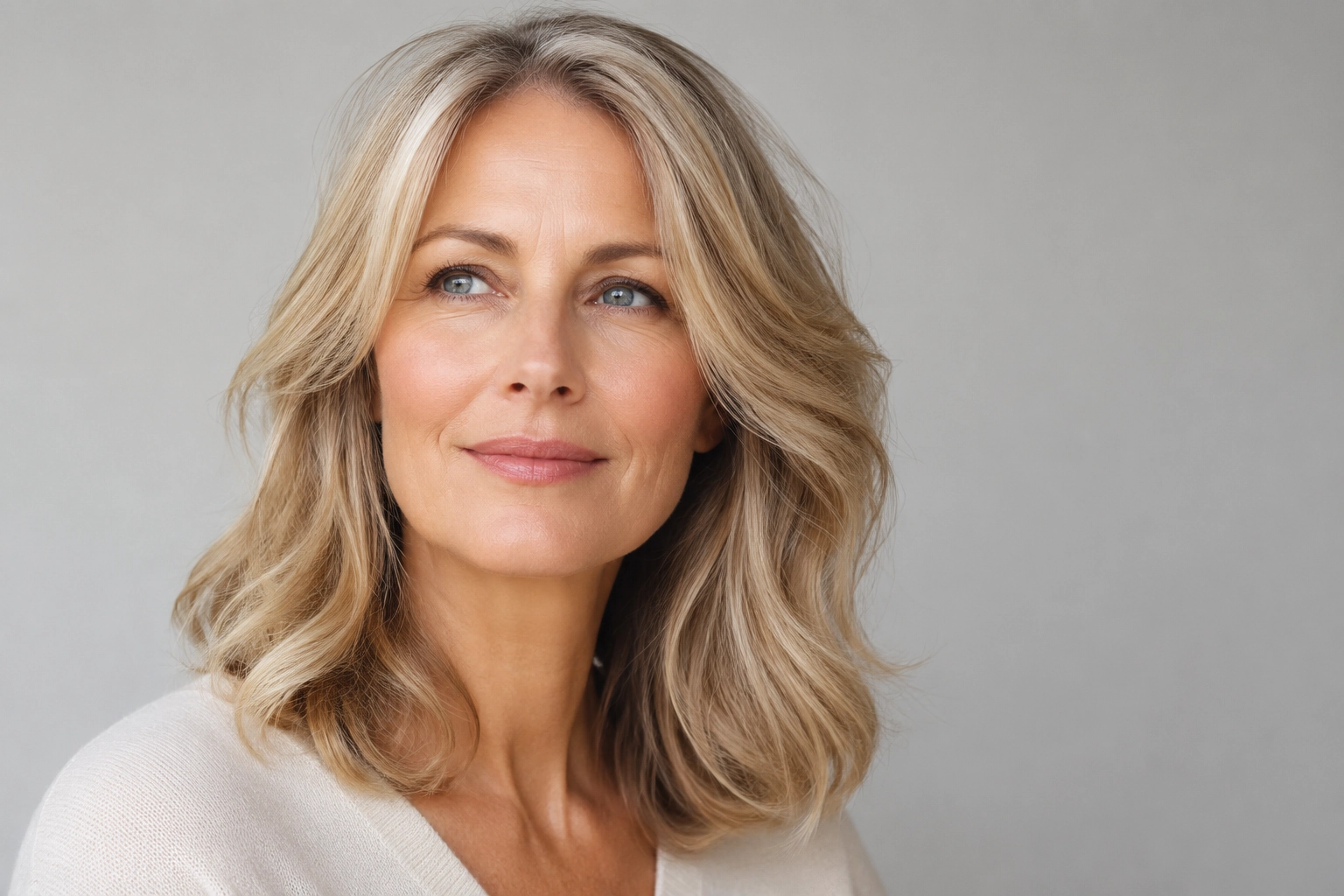
This article looks at why so many women experience hair loss during menopause, what is happening beneath the surface, and the practical solutions available to restore fullness and confidence. It explains the hormonal changes behind menopausal thinning - when it tends to begin, how this type of hair loss usually presents, the emotional toll it can take, and the range of options from lifestyle adjustments to handmade wigs and hair toppers. Key points include:
- Why falling oestrogen and progesterone levels during menopause lead to thinning hair and a more visible scalp
- When menopausal hair loss tends to start, including during the perimenopause years
- How menopausal hair loss typically appears, including diffuse thinning across the crown and a widening parting
- The link between menopause and female pattern hair loss as androgens become more dominant
- The emotional impact of losing hair at a time of significant physical and personal change
- Lifestyle, dietary and medical approaches that may help support healthier hair
- How handmade wigs, hair toppers and hairpieces can restore natural looking fullness
- Why a personal consultation helps you find a solution matched to your hair, lifestyle and stage of hair loss
Hair loss during menopause is mainly caused by falling levels of oestrogen and progesterone, the hormones that help keep hair in its growing phase. As these hormones decline, hair grows more slowly, becomes finer and sheds more easily, while a relative rise in androgens can trigger female pattern thinning.
Menopause brings a wave of changes, and hair is often one of the last things women expect to be affected. Yet thinning hair, a wider parting and a scalp that feels more exposed are among the most common, and most upsetting, symptoms of this stage of life. If you have noticed more strands in your brush or less body in your ponytail, you are far from alone, and there are gentle, natural looking ways to feel like yourself again.
WHY DOES MENOPAUSE AFFECT YOUR HAIR?
Throughout most of our lives, oestrogen and progesterone help keep hair in the growing (anagen) phase for longer, which is part of why many women enjoy thick, healthy hair during their reproductive years. As menopause approaches, these hormone levels drop. Hair follicles spend less time growing and more time resting and shedding, so hair becomes finer, drier and slower to replace itself.
At the same time, the balance shifts towards androgens, the hormones that were always present but previously kept in check. In women who are genetically predisposed, this can make the hair follicles on the scalp more sensitive, gradually shrinking them and leading to what is known as female pattern hair loss. The result is often a mix of overall thinning and a more defined pattern of loss around the crown and parting.
WHEN DOES MENOPAUSAL HAIR LOSS START?
Hair changes can begin earlier than many women expect, often during perimenopause - the transitional years leading up to menopause when hormone levels first start to fluctuate. Some women notice their hair feeling finer or shedding more in their early to mid forties, well before other menopausal symptoms become obvious. For others, the most noticeable change comes after menopause itself.
Because the shift is gradual and easy to put down to age, stress or a change of season, it can take time to connect thinning hair with hormonal change. Recognising the link early is helpful, as it allows you to start supporting your hair and exploring your options sooner rather than waiting until the loss becomes more advanced.
WHAT DOES MENOPAUSAL HAIR LOSS LOOK LIKE?
Menopausal hair loss usually appears as gradual, diffuse thinning across the whole scalp rather than sudden bald patches. Many women first notice a widening parting, reduced volume at the crown, or a ponytail that feels noticeably thinner than before.
This pattern often overlaps with female pattern hair loss, where the thinning is concentrated along the top and crown while the hairline at the front is largely preserved. Because the change is gradual, it can take time to recognise, which is why so many women only seek advice once the scalp has become more visible. Understanding the type of wigs for thinning hair and hairpieces that suit your stage of hair loss makes it far easier to choose the right solution when you are ready.
THE EMOTIONAL IMPACT
Hair is deeply tied to identity, femininity and confidence, so losing it during menopause can feel like an unwelcome extra burden at an already demanding time. Alongside hot flushes, sleep changes and shifting energy levels, watching your hair thin can chip away at how you feel when you look in the mirror.
These feelings are completely valid. Many women describe feeling less like themselves, avoiding certain hairstyles, or becoming anxious about wind, bright light or being photographed. It can also feel isolating, because hair loss in women is still talked about far less openly than it should be. Acknowledging the emotional side of this change is an important first step, and knowing that discreet, natural looking solutions exist can bring real relief and a renewed sense of control.
WHAT ARE MY OPTIONS?
The good news is that there is a full spectrum of options, and the right one depends on how much hair you have lost and what feels comfortable for you. Many women combine approaches, supporting their natural hair while also using a hairpiece or wig for fullness and reassurance.
Lifestyle and dietary changes are a sensible starting point. A balanced diet rich in protein, iron and healthy fats, good sleep, managing stress, and gentle hair care can all help support the hair you have. Some women also speak to their GP about medical approaches, including hormone replacement therapy or topical treatments, which may help slow thinning for certain individuals. These options work best when started early, which is another reason to act as soon as you notice a change.
When you want an immediate visible difference, hair toppers are often the ideal first step for menopausal thinning. A topper clips onto your own hair to add coverage and volume exactly where you need it, blending in with the hair you still have. For practical ways to boost fullness day to day, our guide to instant volume for thinning hair offers simple, expert tips you can use straight away.
For more advanced or widespread thinning, a full wig gives complete, worry free coverage. Handmade real human hair wigs move, feel and behave like your own hair, so no one will know unless you choose to tell them. Our European hair wigs are crafted from premium real hair for the most natural result, and our made to measure wigs are created to your exact head shape and matched to your natural colour, texture and length, giving the most seamless and comfortable finish possible.
HOW MANDEVILLE LONDON CAN HELP
With over 50 years of experience crafting the finest handmade wigs and hairpieces, we understand exactly how menopausal hair loss affects both your appearance and your confidence. In our private Fulham studio, we take the time to listen, assess your hair, and talk you through every option without pressure. If you are unsure what to expect, our overview of what to expect from a wig consultation explains the process step by step.
Whether you need a subtle topper to restore lost volume or a complete head of hair, our team will match a solution to your hair, your lifestyle and your stage of hair loss. Many of our clients tell us that walking out of the studio feeling like themselves again is a turning point, and that is exactly what we are here to help you achieve.
FINAL THOUGHTS
Menopausal hair loss is not always permanent. Some women see improvement once hormone levels settle or with the right support, while others experience longer term thinning. Because every journey is different, the reassuring truth is that natural looking, comfortable solutions are always available, whatever stage you are at.
Hair loss during menopause is common, it is not your fault, and it does not have to define how you feel. Whether you choose to support your natural hair, add a topper, or invest in a bespoke wig, the right choice is the one that restores your comfort and confidence. If you would like personal advice, we are always here to help, book your consultation and let us guide you through the options at your own pace.
FREQUENTLY ASKED QUESTIONS (FAQ)
Why does menopause cause hair loss?
Menopause causes hair loss mainly because levels of oestrogen and progesterone fall. These hormones help keep hair in its growing phase, so as they decline hair becomes finer, grows more slowly and sheds more easily. A relative rise in androgens can also lead to female pattern thinning.
When does hair loss during menopause usually start?
Hair loss can begin during perimenopause, sometimes in a woman's early to mid forties, before other symptoms are obvious. For some the change is more noticeable after menopause. Because it happens gradually, it is often mistaken for normal ageing or stress.
Is menopausal hair loss permanent?
Menopausal hair loss is not always permanent. Some women see improvement once hormone levels settle or with the right support, while others experience longer term thinning. Because outcomes vary, it helps to explore both hair health measures and cosmetic solutions such as toppers or wigs.
What is the difference between menopausal thinning and female pattern hair loss?
Menopausal thinning often appears as diffuse loss across the whole scalp, while female pattern hair loss tends to show as a widening parting and reduced volume at the crown. The two frequently overlap during menopause, as hormonal changes make hair follicles more sensitive to androgens.
Can a wig or hair topper help with menopausal hair loss?
Yes. A hair topper can add volume and coverage where hair is thinning, while a full wig offers complete coverage for more advanced loss. Handmade options made from real human hair blend naturally with your own hair for a realistic, comfortable result.
How do I choose the right solution for menopausal hair loss?
The best solution depends on how much hair you have lost, your lifestyle and your personal preferences. A consultation allows a specialist to assess your hair, discuss your options, and match a topper, hairpiece or wig to your colour, texture and desired look.
Latest blogs

The Gift of Grey: Meet our Latest Silver Hair Donator!
Human Hair vs Synthetic Wigs: How to Choose the Right Option
Choosing a Wig During Chemotherapy: A Guide for Before, During and After Treatment

Get the very nearest you can to having your own hair.
We will listen to your concerns, answer your questions and guide you through the process step by step to find the perfect solution that will work for you.