


Yes, wigs are available on the NHS, but how you get one and what you pay depends on where you live and on your circumstances. In England most adults pay a set charge, currently £80.15 for a stock synthetic wig, unless they qualify for help, while NHS wigs supplied through a hospital are free in Scotland, Wales and Northern Ireland. Wigs are usually arranged through a hospital team rather than your GP, and the range offered, the value of any voucher and the suppliers you can use vary from one area to another. Separately, people with qualifying medical hair loss can often buy a private wig without VAT, and charities such as The Little Princess Trust provide free wigs for children and young people.
Key points include:
- How NHS wigs are arranged and who refers you
- What an NHS wig costs in England
- Who can get an NHS wig free of charge
- Why the NHS wig service varies from area to area
- How VAT relief works on private wigs for medical hair loss
- Charity funding and other sources of support
- The difference between an NHS wig and a private wig
- Questions worth asking before you decide
It is one of the first questions people ask when hair loss becomes real, and one of the hardest to get a straight answer to. Information is spread across hospital leaflets, government pages and word of mouth, and much of it depends on your postcode. Mandeville London is a private wigmaker and is not part of any NHS wig scheme, but we are asked about NHS provision so often that we wanted to set out clearly how it works, so you can weigh up every option open to you.
HOW NHS WIGS ARE ARRANGED
An NHS wig is not usually something your GP can prescribe directly. Wigs are arranged through hospital services, so the referral normally comes from the team already looking after you: your oncology team or cancer nurse if hair loss is caused by chemotherapy, or a dermatologist if it is caused by a condition such as alopecia areata. If you are not yet under a specialist, your GP can refer you to one.
The hospital then issues a wig prescription, sometimes called a voucher, which you take to an approved supplier. Some hospitals run their own wig service on site, while others contract local salons or wig specialists. The supplier shows you the wigs your prescription covers, fits the one you choose and collects any charge that applies.
WHAT AN NHS WIG COSTS IN ENGLAND
In England, NHS wig charges were frozen for 2026/27 at the same level as the previous year. According to the NHS Business Services Authority, the current charges are £80.15 for a stock modacrylic (synthetic) wig, £212.35 for a partial human hair wig and £310.55 for a full made-to-order human hair wig.
It helps to understand what these figures are. They are the amount you contribute, not the value of the wig, and they do not mean you can choose any wig at that price. Most NHS provision is ready-made synthetic, and human hair wigs are generally only offered in specific clinical circumstances, such as a diagnosed reaction to synthetic fibres. If you pay a charge and later discover you were entitled to help, you can claim a refund using form HC5(W), normally within three months of paying.
WHO CAN GET AN NHS WIG FREE OF CHARGE
In England, you are entitled to a free NHS wig if you are under 16, under 19 and in full-time education, a hospital inpatient when the wig is supplied, or hold a full help certificate (HC2) under the NHS Low Income Scheme. People receiving Pension Credit Guarantee Credit also qualify, and some people receiving Universal Credit do too, depending on their earnings. A partial help certificate (HC3) reduces the amount you pay rather than removing it, and war pensioners can receive a free wig where it relates to their accepted disability.
One point catches many people out. Free prescriptions and free wigs are not quite the same thing in England. Being over 60, or holding a medical or maternity exemption certificate, gives you free prescriptions but does not automatically entitle you to a free wig, so it is worth checking with the hospital before your fitting.
Outside England the picture is simpler. NHS wigs supplied through a hospital are free in Scotland and Wales, and in Northern Ireland wigs are provided free through the Health Service.
WHY THE NHS WIG SERVICE VARIES FROM AREA TO AREA
Although the charges in England are set nationally, the service itself is organised locally. Each hospital trust or health board decides which suppliers it works with, how much a prescription is worth to the supplier, how many wigs a patient can have in a year and whether you can pay extra towards a more expensive wig. Two people with the same diagnosis in different cities can therefore have quite different experiences.
Some areas allow a top-up, where you pay the difference between the prescription value and the wig you prefer, as long as you use an approved supplier. Others do not. The range on offer, the waiting time for a fitting and the number of replacements also differ. The most reliable source of information is the team that refers you, so ask them directly how the service works in your area rather than relying on what a friend elsewhere was offered.
HOW VAT RELIEF WORKS ON PRIVATE WIGS
If you decide to buy a wig privately, VAT can make a significant difference to the cost. Wigs are normally charged at the standard rate of 20%, but HMRC allows them to be zero-rated when they are supplied to someone who meets its definition of chronically sick or disabled. In practice, many people whose hair loss is caused by a medical condition or its treatment, such as chemotherapy or alopecia, are able to buy their wig without VAT.
The relief is not automatic. You will usually be asked to sign an eligibility declaration confirming your circumstances, and this needs to be completed before the purchase rather than afterwards. Eligibility depends on the individual situation, and HMRC can penalise false declarations, so if you are unsure, HMRC’s guidance on VAT reliefs for disabled people or its VAT helpline is the place to check. At Mandeville London, only clients with medical hair loss are VAT exempt, and we explain whether this is likely to apply to you as part of the consultation.
CHARITY FUNDING AND OTHER SOURCES OF SUPPORT
For children and young people, The Little Princess Trust provides real hair wigs free of charge to those up to the age of 24 who have lost their hair through cancer treatment, and also helps young people with other hair loss conditions, subject to availability. Their wigs are fitted and styled through a network of approved salons.
For adults, support is more patchy. Some cancer charities and hospital support services offer small grants towards the extra costs of treatment, and your cancer nurse is usually the best person to ask about what is available locally. It is also worth checking any private medical insurance or employee benefits scheme you have, as some policies contribute towards a wig after cancer treatment.
NHS WIG OR PRIVATE WIG: WHAT IS THE DIFFERENCE?
An NHS wig is a practical, affordable option, and for many people facing a few months of chemotherapy it is exactly what they need. Stock synthetic wigs are light, easy to care for and ready quickly. Where hair loss is long term, or where a closer match to your own hair matters, many people find a private wig worth considering instead or as well. Some wear an NHS wig in the early weeks and move to a private wig later.
The main differences lie in the hair, the fit and how long the wig lasts. Our guide to human hair vs synthetic wigs explains how the two compare on movement, styling and lifespan. Our ReadyMade wigs are handmade from European human hair and can be cut and styled in a single visit, our Made to Measure wigs are built around your own head shape, colour and density, and our Swish lace front wigs offer a ready to wear option at a wider range of price points. Where there is still hair to blend with, a hair topper or half wig may be all you need.
If treatment is the reason for your hair loss, our chemotherapy wigs service and our guide to choosing a wig before, during and after treatment explain the timings that tend to work best. For long-term conditions, our page on wigs for alopecia covers the options in more detail. When comparing costs, it helps to think about value over the life of the wig: Our guide to what affects the price of a custom human hair wig and our advice on when to repair or replace a wig both look at this in more depth.
QUESTIONS WORTH ASKING BEFORE YOU DECIDE
Whichever route you take, a few questions will save time and disappointment. When speaking to your hospital team, ask which suppliers you can use, what your prescription covers, how many wigs you can have each year, whether top-ups are allowed and whether human hair is available in your circumstances. Ask, too, whether you qualify for a free wig and what proof of entitlement you need to bring.
When speaking to a private wigmaker, ask whether VAT relief is likely to apply, how many fittings are included, how long the wig will take to make, and what aftercare and servicing are available. A good wigmaker will be open about all of this, and knowing what to expect from a wig consultation helps you arrive with the right questions. If someone is coming with you, our guide to supporting someone through hair loss has advice on how they can help.
HOW MANDEVILLE LONDON CAN HELP
We are a private studio and are not affiliated with any NHS wig programme, so we are unable to accept NHS wig prescriptions or vouchers. What we can offer is more than 50 years of experience making handmade wigs and hairpieces from fine European hair, an honest conversation about which option suits your hair loss, and clear guidance on VAT relief. Our price guide sets out costs openly, and our private Fulham studio sees clients by appointment only, with friends and family welcome. When you are ready to explore your options, you can book a complimentary consultation.
FINAL THOUGHTS
NHS wigs are a genuine option, and for many people they are the right first step. The key is knowing how the service works in your area, whether you qualify for help with the cost and what alternatives exist if you need something different. Ask your hospital team the specific questions, check your eligibility for VAT relief before buying privately, and remember that choosing one route now does not rule out another later.
FREQUENTLY ASKED QUESTIONS (FAQ)
Can my GP prescribe a wig?
Not usually. NHS wigs are arranged through hospital services, so the prescription normally comes from your oncology team, cancer nurse or dermatologist. If you are not under a specialist yet, your GP can refer you to one.
How much does an NHS wig cost in England?
For 2026/27, the charges are £80.15 for a stock synthetic wig, £212.35 for a partial human hair wig and £310.55 for a full made-to-order human hair wig. You will not pay anything if you qualify for help, for example if you are under 16 or hold an HC2 certificate.
Are NHS wigs free in Scotland, Wales and Northern Ireland?
Yes. NHS wigs supplied through a hospital are free in Scotland and Wales, and wigs are provided free through the Health Service in Northern Ireland. The range available and the suppliers you can use are still set locally.
Can I use an NHS wig voucher with a private wigmaker?
Only with a supplier your hospital has approved, and arrangements vary between areas. Some trusts allow you to pay a top-up towards a more expensive wig and others do not. Mandeville London is not affiliated with any NHS wig programme and cannot accept NHS prescriptions or vouchers.
Do NHS wigs come in human hair?
Most NHS wigs are ready-made synthetic wigs. Human hair wigs are generally only provided in specific clinical circumstances, so ask your hospital team whether this applies to you.
Can I buy a private wig without paying VAT?
Often, yes, if your hair loss is caused by a medical condition or its treatment. You will usually need to sign an eligibility declaration before the purchase. At Mandeville London, only clients with medical hair loss are VAT exempt, and we explain this during the consultation.
Can children get a free wig?
Yes. Children under 16, and young people under 19 in full-time education, are entitled to free NHS wigs in England. The Little Princess Trust also provides free real hair wigs to children and young people up to the age of 24 with hair loss.
Latest blogs

Frontal Fibrosing Alopecia and a Receding Hairline: Hairpiece Options for Women

Wigs for Children and Teenagers: A Parent’s Guide to Hair Loss Support
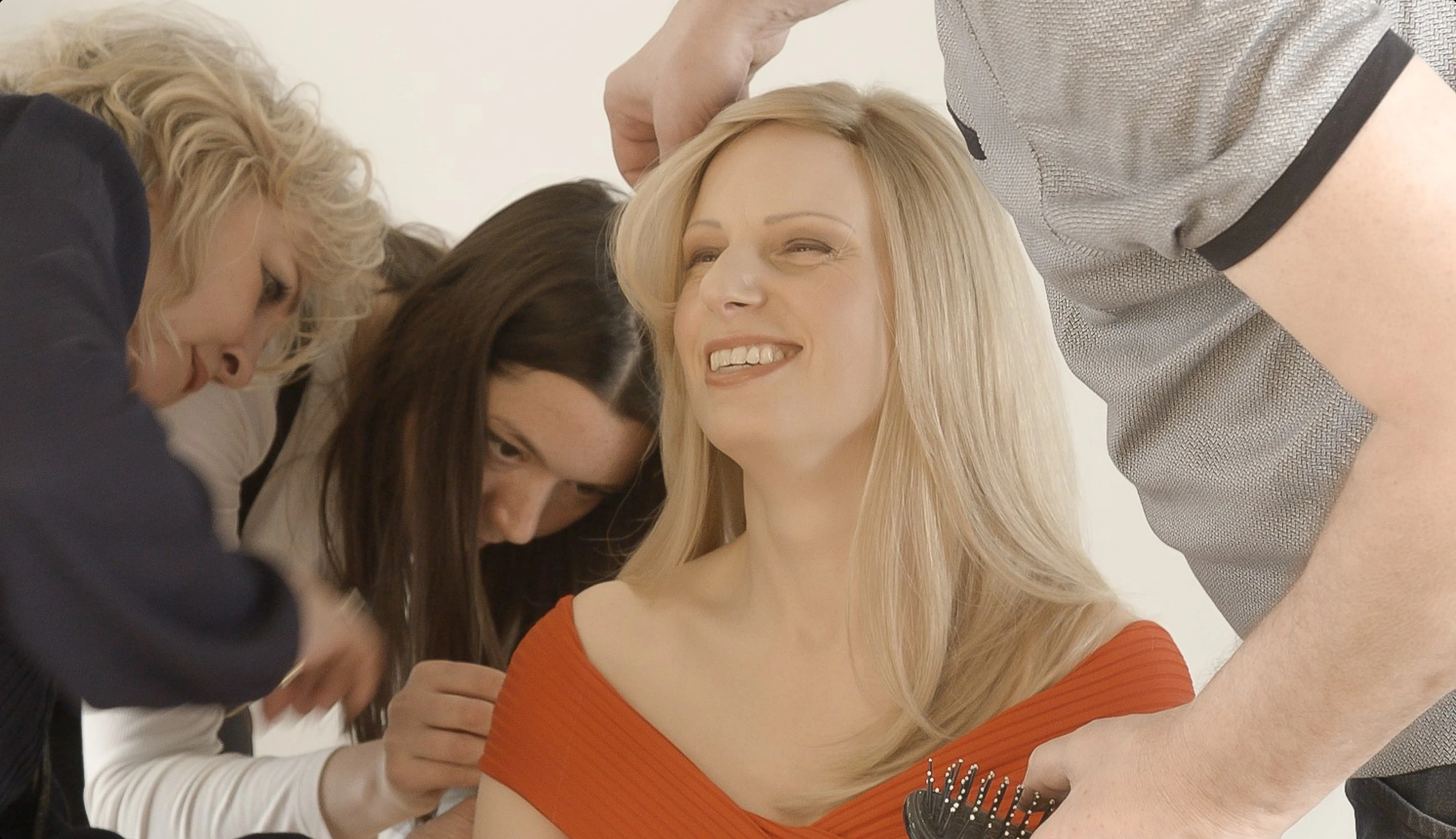
Supporting Someone Through Hair Loss: A Guide for Partners, Family and Friends

Get the very nearest you can to having your own hair.
We will listen to your concerns, answer your questions and guide you through the process step by step to find the perfect solution that will work for you.