

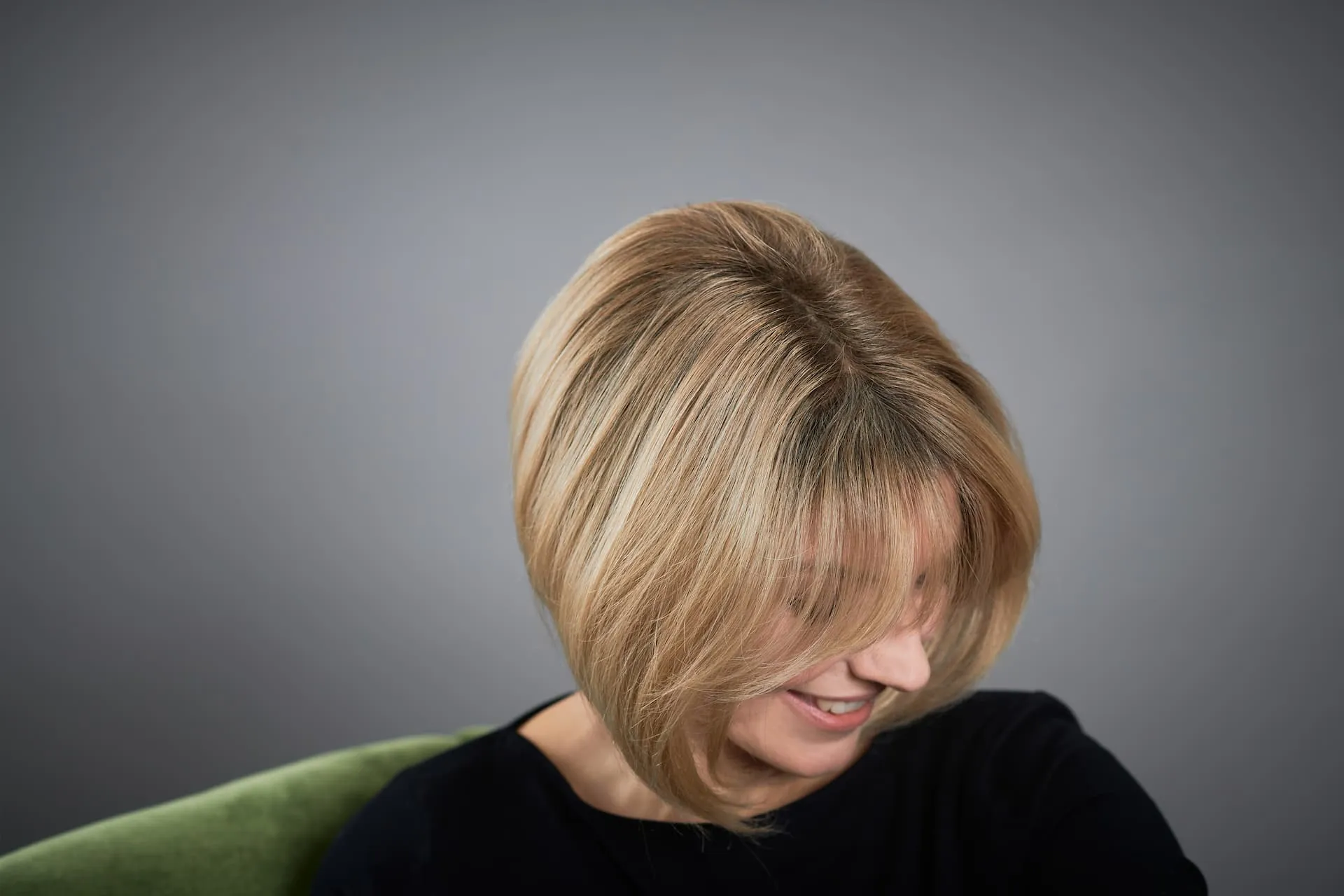
Trichotillomania causes hair loss in a pattern that is often quite different from other kinds of thinning, with uneven patches, changing areas and hair at several different lengths. That makes coverage a particular challenge, and it also makes a well chosen hairpiece or wig genuinely useful. Coverage is not a treatment for hair pulling, and support from a healthcare professional remains important, but many people find that being able to leave the house without worrying about a visible patch takes real pressure off day to day life.
Key points include:
- Why hair loss from pulling looks different and what that means for coverage
- Why coverage sits alongside professional support rather than replacing it
- When a fringe piece, topper, half wig or full wig is the better fit
- Why attachment method matters when remaining hair is fragile or patchy
- How to protect the scalp and the hair that is still there
- What changes if the affected area moves or regrowth begins
- What to expect from a discreet, unhurried consultation
- Where to find specialist support in the UK
Trichotillomania is a recognised condition in which a person feels a strong urge to pull out their own hair, most often from the scalp, eyebrows or eyelashes. It affects people of every age and background, it is far more common than the silence around it suggests, and it is nobody's fault. What follows is about coverage rather than causes, written for anyone who wants to feel more comfortable while they work on the rest.
HOW HAIR LOSS FROM PULLING DIFFERS
Most hair loss follows a recognisable pattern. Pulling does not. The affected area may be a single patch, several patches, a parting line, a fringe area or the eyebrows, and it can move over time. There is often a mix of bare skin, short regrowth and full length hair in the same area, which is why ordinary styling tricks tend to stop working sooner than people hope.
It also means the coverage that suits you may not be the coverage that suits somebody with gradual, even thinning, which is worth bearing in mind when you read about the different types of alopecia or look at solutions designed for hair that is thinning rather than absent.
In most cases hair regrows once pulling in an area stops. Where pulling has continued in the same place over many years, regrowth can become sparser, and a dermatologist or trichologist is the right person to assess that.
COVERAGE IS SUPPORT, NOT A SOLUTION ON ITS OWN
It is worth saying plainly: A hairpiece hides hair loss, it does not treat the reason for it. Trichotillomania responds to proper support, and the usual first step is speaking to your GP, who can discuss talking therapies such as habit reversal training and refer you where appropriate.
In the UK, Trichotillomania Support and the TLC Foundation for Body-Focused Repetitive Behaviors both offer information and peer support, and many people find that speaking to others with the same experience is the point at which things start to shift. Mind and the NHS website also carry accessible overviews if you are not ready to speak to anyone yet.
Where coverage genuinely helps is with the part nobody talks about: The appointments you cancel, the windy days you avoid and the constant background calculation about whether a patch is showing. Reducing that load is not vanity. For a lot of people it is what makes everything else feel more manageable.
FRINGE PIECES AND SMALL HAIRPIECES
Where the loss sits around the hairline or the front of the head, a small piece often does more than a large one. Fringe pieces blend into your own hair at the front, while frontal hairpieces cover the hairline and the area immediately behind it and leave the rest of your hair as it is.
This partial approach appeals to many people because it keeps as much of their own hair in play as possible. There is a wider range of hairpieces than most people realise, and a few styling tricks for instant volume work alongside a piece rather than instead of one.
TOPPERS AND HALF WIGS FOR PATCHY LOSS
A hair topper sits on the crown or parting area and blends with the hair around it, which makes it a strong option when pulling has been concentrated in one region. If the idea is new to you, it helps to know how toppers work and who they suit before you start comparing them.
A half wig covers more of the head while still using your own hairline and front section, which can be a comfortable middle ground when the affected area is larger or when patches appear in more than one place.
The practical question with both is how much surrounding hair there is to blend into, and whether that hair is likely to stay. A consultant can help you judge this honestly rather than optimistically, because a piece that depends on hair you may not have in six months is a frustrating purchase.
WHEN A FULL WIG MAKES MORE SENSE
If the affected areas are extensive, scattered or changing, a full wig removes the blending problem altogether. A ReadyMade wig can be chosen, cut and styled quickly when you want a solution now, while a Made to Measure wig is built on a foundation created to your own head shape, with colour, texture, length and density chosen to match the hair you had.
A full wig also has a practical advantage that comes up often in this context: It covers the whole scalp consistently, so there is nothing to keep checking in shop windows. And if the worry is whether anyone will notice, what actually makes a wig look fake is rarely what people expect.
ATTACHMENT, TENSION AND PROTECTING WHAT YOU HAVE
Attachment deserves particular care here, because the remaining hair may be fragile, short or unevenly distributed. Clips need enough secure hair to anchor into, and they should never be placed where they pull. Where there is little hair to work with, medical tape or a combination of methods is usually more comfortable and more secure and in some cases, a wig grip will be a great solution. A well fitted, lightweight piece does not damage healthy hair, but tension and weight are worth avoiding from the start.
A light foundation matters more than usual when the scalp is sensitive or when short regrowth is coming through, and keeping the skin underneath clean and comfortable gives that regrowth the best environment.
WHEN THE AFFECTED AREA CHANGES
One of the reasons people hesitate is a fair one: What if the patch moves, or what if my hair grows back?
Both are common, and neither wastes a well chosen piece. A full wig is unaffected by what happens underneath it. A topper or half wig can often be recut or restyled as things change, and many people move between a partial piece and a full wig at different stages. If your hair returns, you simply wear the piece less, or keep it for the days you would rather not think about it.
WHAT A CONSULTATION IS LIKE
Nobody should have to explain themselves to get help with their hair. Our appointments take place in a private Fulham studio, by appointment only, and you are welcome to bring somebody with you. We will look at what hair you have, what you want covered and how you live, then talk through the options honestly, including the ones that cost less. Knowing what happens in the appointment beforehand means there are no surprises on the day.
We have made handmade human hair wigs and hairpieces for more than 50 years, for every kind of hair loss, and discretion is simply how we work. If you would like to talk it through, you can book a complimentary consultation.
FINAL THOUGHTS
Hair pulling is a difficult thing to live with, and the visible part of it can feel like the hardest to control. Coverage will not resolve the condition, and it is worth getting proper support for that side of it. What a well made piece can do is give you back the ordinary things, going out in the wind, sitting under bright lights, having your photograph taken, without the running commentary in your head. That is a reasonable thing to want, and it is entirely achievable.
FREQUENTLY ASKED QUESTIONS (FAQ)
Will a wig or topper stop my hair growing back?
No. A lightweight, well fitted piece that does not pull on the hair does not prevent regrowth. Problems arise from tension and weight rather than from coverage itself, which is why attachment method and fit are chosen around the hair you still have. Breathability is also important, as it helps keep the scalp healthy and in the best condition for regrowth.
Is a hairpiece a treatment for trichotillomania?
No. Coverage addresses the appearance of hair loss, not the urge to pull. Speaking to your GP is the usual first step, and organisations such as Trichotillomania Support and the TLC Foundation for Body-Focused Repetitive Behaviors offer information and peer support.
Should I choose a topper or a full wig?
It depends on how much hair surrounds the affected area and how stable that hair is. A topper or fringe piece blends with your own hair and suits a defined area, while a full wig removes the need to blend and suits extensive or changing loss.
What if the area I pull from changes?
That is common and is worth mentioning at consultation. A full wig is unaffected by changes underneath, and a partial piece can often be adjusted or restyled. Many people use different solutions at different stages.
Can I wear a piece over short regrowth?
Yes. Short regrowth is not a barrier, though it can affect which attachment method is most comfortable. Keeping the scalp clean and completely dry before wearing a piece helps regrowth and comfort alike.
Will people be able to tell?
With a well matched, well fitted human hair piece, generally not. Hand knotted human hair moves and reflects light like growing hair, and density and hairline are chosen to suit you rather than to look dramatic.
Do I have to explain my hair loss at the appointment?
Only as much as you want to. We need to understand what hair you have and what you would like covered in order to advise you well, but you are never required to discuss anything you would rather not.
Latest blogs
.webp)
Supporting Someone Through Hair Loss: A Guide for Partners, Family and Friends
How Secure Is a Wig Really? Confidence in Everyday Life
Wig, Hair Transplant or Medication? Comparing Your Options for Long-Term Hair Loss

Get the very nearest you can to having your own hair.
We will listen to your concerns, answer your questions and guide you through the process step by step to find the perfect solution that will work for you.